When should a startup invest in branding?
By Samuel Santos · November 17, 2026 · 6 min read
Almost every founder runs the same math: money into the product now, brand later. That math works until the day it stops working. The company already delivers more than it seems to, loses deals to competitors with weaker products, and can't explain why.
Invest in branding too early and it becomes an expense. Too late and it holds you back. This piece shows how to find the middle.
The short answer
The right time for a startup to invest in branding is when the product has found people willing to pay for it, and the brand starts to limit growth. In practice, that usually happens before a funding round, a major launch or entry into a new market.
Before that, a minimum brand is enough: a name you can register, a simple identity and one clear sentence about what the company does and who it is for.
Why a startup brand is different
An established company usually has a stable product and a known audience. A startup has the opposite, and that changes the job of the brand.
- The product changes fast. A pivot can change the audience, the price and the promise within months. The brand has to survive those changes without being rebuilt each time.
- You speak to several audiences at once. Customers, investors and the people you want to hire all need to understand and believe in the same company.
- The category often doesn't exist yet. If nobody searches for what you do, the brand has to explain the problem before it can sell the solution.
That is why startup branding starts with positioning: which territory the company wants to own in these people's minds. The visual identity comes next and translates that choice.
What to do at each stage
Idea and validation
The goal is to prove that someone has the problem and will pay to solve it. Spending heavily on brand at this stage is usually wasted, because a lot is still going to change.
What is worth having:
- a name you can register, with the domain available;
- a simple, legible logo;
- one sentence saying what the company does, for whom, and why it is different.
Product-market fit
This is where branding starts to pay off. You know who buys, why they buy and who you compete with. You can choose a position based on evidence rather than assumptions.
It is the moment to define your territory, value proposition, core message, tone of voice and a visual identity built to grow.
Fundraising and scale
The brand has to hold up as more people speak for it: new salespeople, new campaigns, new markets. Without a clear system, every piece ends up looking different.
This is where the brand guidelines, product and website applications, sales materials and the pitch come in. A funding round is a good deadline: investors also judge how clearly a company explains itself.
Pivot or repositioning
When the business changes its audience, model or ambition, the old brand starts telling the wrong story. Repositioning doesn't mean starting from zero. Often the name and part of the identity stay, and what changes is the territory.
Signs it is time
- The product has evolved and the brand has fallen behind. You deliver more than you appear to.
- Customers compare you only on price and feature lists.
- Everyone on the team explains the company differently.
- A funding round, a launch or a new market is coming up.
- You feel uneasy sending your website to a big client.
If two of these sound familiar, the brand is already costing you, even if that cost never shows up in a report.
What to answer before hiring a studio
A branding project goes further when the startup arrives with a few answers, even provisional ones:
- Product. What problem does it solve, and what do you do that others don't?
- Market. Who do you compete with, and where is the open space?
- Culture. What does the company believe in, and what would it never do?
- Future. Where does the company want to be in three years?
You don't need all of it ready. A good brand diagnosis helps answer exactly these questions. At Ocupa&Co., that is what Método Ocupa© does, in 19 points across business, audience, value and story.
Costly mistakes
- Starting with the logo. It is what everyone sees, but without positioning the logo has nothing to say, and it needs redoing at the first change.
- Choosing a name without checking trademarks. A name you can't register, or whose domain is taken, becomes a problem exactly when the company grows.
- Copying the startup that worked abroad. What worked there occupies someone else's territory. Imitation makes you similar, not chosen.
- Waiting for the perfect brand. A well-thought minimum brand beats no brand. It can, and should, evolve with the product.
In practice: the Verboo case
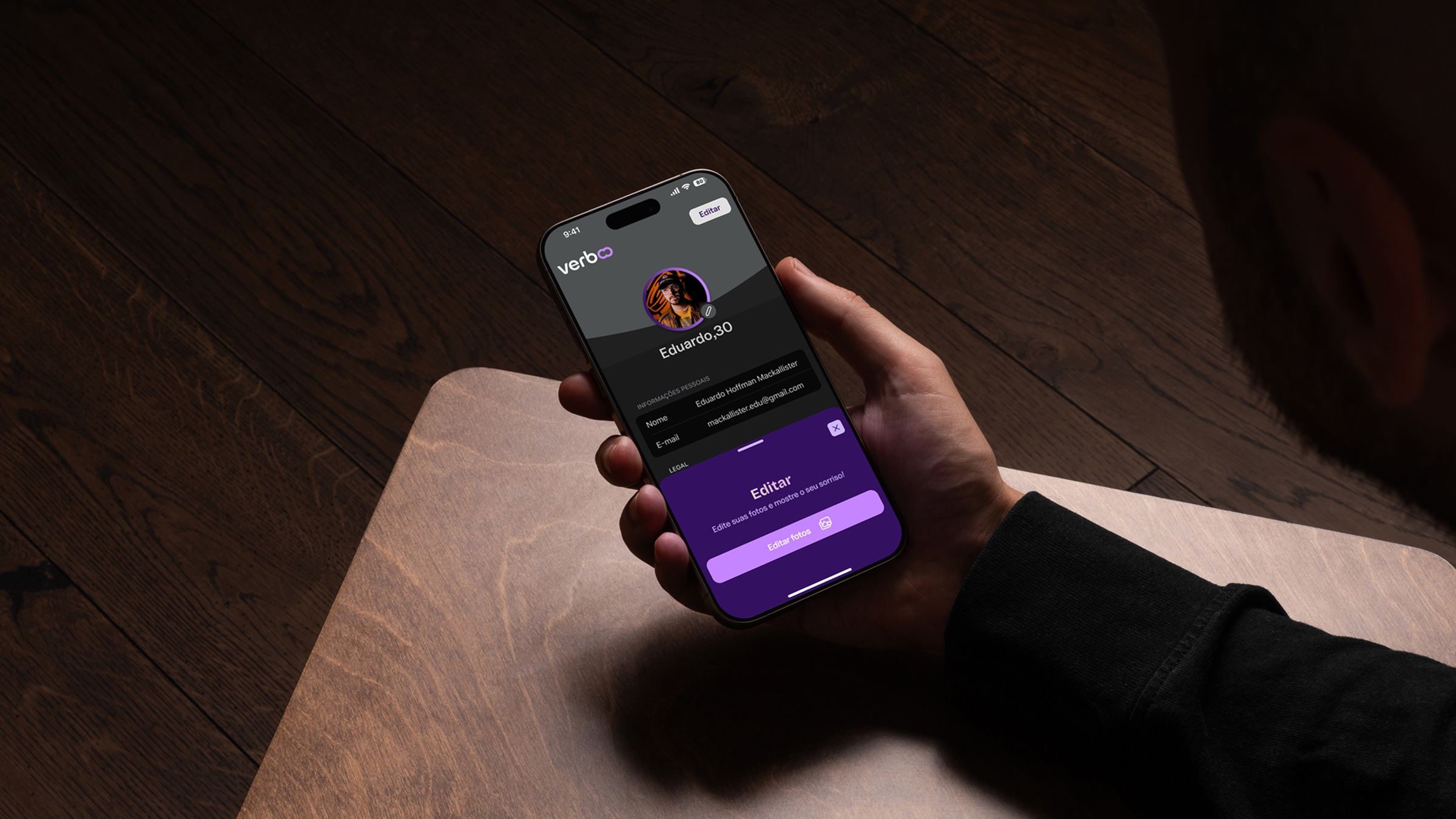
Verboo is an app that connects young Adventist Christians who want to share faith, values and life with someone. In a market full of dating apps, the brand had to make clear what sets it apart.
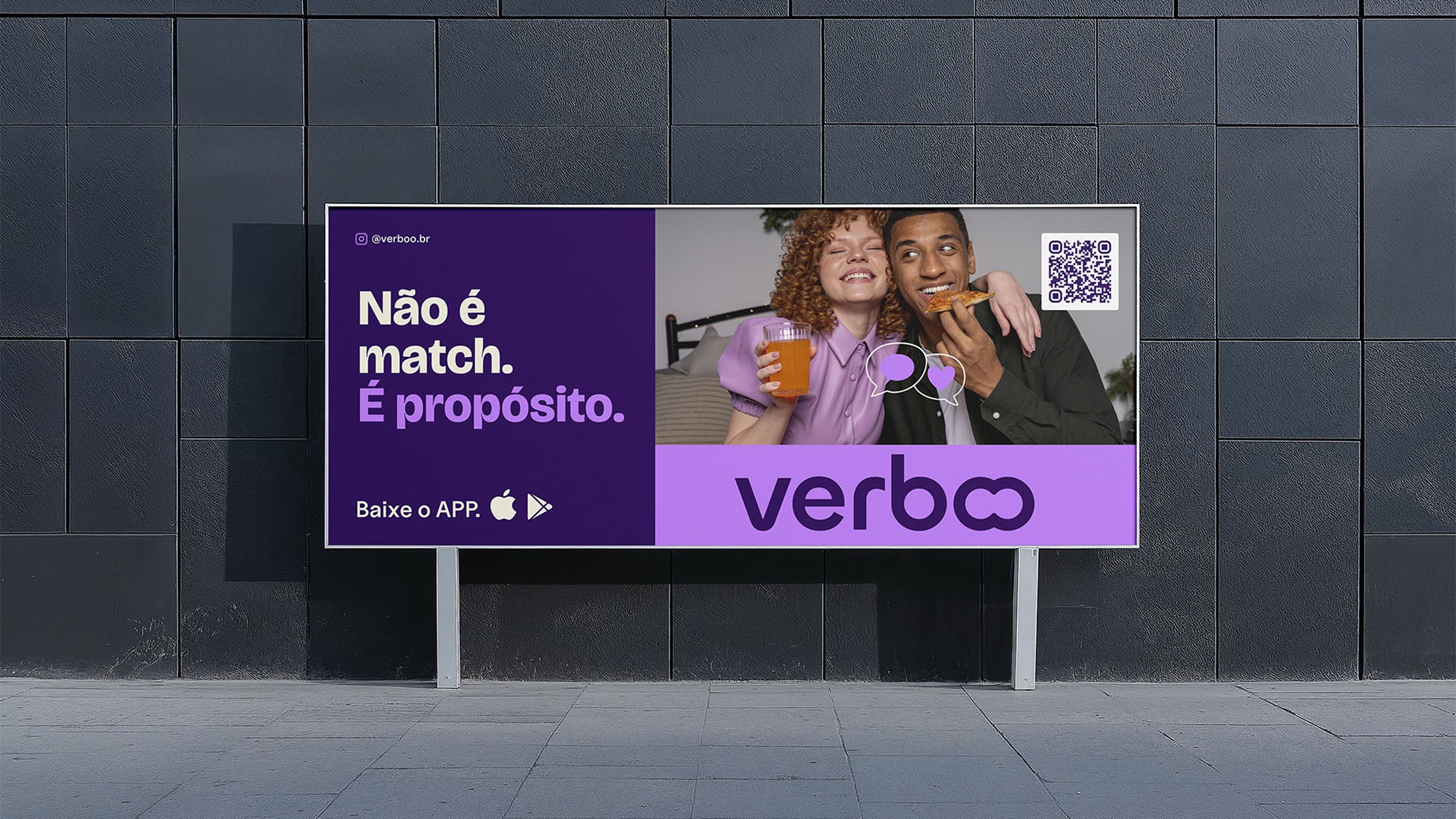
The work started with the territory, before any design: Verboo doesn't promise dates, it promises relationships built on shared purpose. That led to the line that guides the brand, "It's not a match. It's a purpose.", and the identity, the app's language and the campaigns grew from it.
Frequently asked questions
Does a startup need branding before the MVP?
Not a full project. Before the MVP, a minimum brand is enough: a registrable name, a simple identity and one clear positioning sentence. The larger investment makes more sense once the product finds people willing to pay for it.
What is the difference between branding and marketing?
Branding defines who the company is, which territory it occupies and how it presents itself. Marketing takes that message to people. Without branding, marketing spends more to say something different in every campaign.
How long does a startup branding project take?
At Ocupa&Co., strategy and visual identity take 45 to 60 days. Projects with naming or many applications can take longer, and the timeline is agreed before work starts.
How much does startup branding cost?
It depends on what the project includes. At Ocupa&Co., projects start at USD 2,000, with a fixed scope.
Is it time for your startup?
If you recognized your company in the signs above, it is worth a conversation. Talk to Ocupa&Co. and tell us what stage you are at. We will help you figure out whether it is time for a minimum brand or a full positioning project.